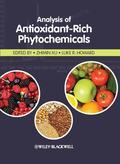
To quantify antioxidants in natural sources, the application of chromatography techniques with different detectors followed by skillful sample preparation is necessary. Analysis of Antioxidant-Rich Phytochemicals is the first book that specifically covers and summarizes the details of sample preparation procedures and methods developed to identify and quantify various types of natural antioxidants in foods. Focusing on the principle of quantification methods for natural antioxidants, the book reviews and summarizes current methods used in the determination of antioxidant-rich phytochemicals in different sources. Chapter by chapter, the distinguished team of authors describes the various methods used for analysis of the different antioxidant-rich phytochemicals - phenolic acids; carotenoids; anthocyanins; ellagitannins, flavonols and flavones; catechins and procyanidins; flavanones; stilbenes; phytosterols; and tocopherols and tocotrienols. Going beyond extensive reviews of the scientific literature, the expert contributors call on their accumulated experience in sample extraction and analysis to outline procedures, identify potential problems in dealing with different samples, and offer trouble-shooting tips for the analysis. Analysis of Antioxidant-Rich Phytochemicals covers the important food applications and health-promoting functions of the major antioxidant phytochemicals, presents general analysis principles and procedures, and systematically reviews and summarizes the various analytical methods necessary for each type of natural antioxidant in different food sources.

Thumb

0 repins 0 comments

Calories-too few or too many-are the source of health problems affecting billions of people in today's globalized world. Although calories are essential to human health and survival, they cannot be seen, smelled, or tasted. They are also hard to understand. In Why Calories Count, Marion Nestle and Malden Nesheim explain in clear and accessible language what calories are and how they work, both biologically and politically. As they take readers through the issues that are fundamental to our understanding of diet and food, weight gain, loss, and obesity, Nestle and Nesheim sort through a great deal of the misinformation put forth by food manufacturers and diet program promoters. They elucidate the political stakes and show how federal and corporate policies have come together to create an "eat more" environment. Finally, having armed readers with the necessary information to interpret food labels, evaluate diet claims, and understand evidence as presented in popular media, the authors offer some candid advice: Get organized. Eat less. Eat better. Move more. Get political.

Thumb

0 repins 0 comments

Originally published in the early 1930s, this extremely scarce early work on poultry keeping is both expensive and hard to find in its first edition. We are now republishing it, using the original text and photographs. Two hundred and thirty three pages deal with every aspect of poultry keeping from egg to table, and will prove invaluable to both the backyard beginner and the larger commercial enterprise. Twenty detailed chapters contain much expert advise on: The Beginner; Breeds and Strains; Houses and Appliances; Foods and Feeding; Hatching; Rearing; Backyard Poultry Keeping; Intensive Poultry Keeping; Winter Egg Production; Day Old Chicks; Ducks; Turkeys; Geese; Guinea Fowls; Diseases of Poultry; Vermin; Egg Preserving; Killing and Shaping; Plucking, Drawing, Trussing; Marketing; Accounts. Etc. The book is well illustrated with photos of breeds and equipment. This is a fascinating read for any poultry enthusiast, and contains much information that is still useful and practical today. Many of the early farming books, particularly those dating back to the 1900s and before, are now extremely scarce and increasingly expensive. We are republishing these classic works in affordable, high quality, modern editions, using the original text and artwork.

Thumb

0 repins 0 comments

So you want to tackle Washington DC! Many visitors are not aware of the wide array of FUN things that there are to do in the District of Columbia. There are literally hundreds of awesome activities! There are many obvious attractions that bring individuals to DC, such as national landmarks, including The White House, The Jefferson Memorial, The National Mall, The Supreme Court, The National Capitol Building and many others. This publication does not contain these. Once again, these are the obvious sights that many people come from world over to see. This book deals with the FUN STUFF! Being a resident of The District of Columbia for so many years, I have listed many places and events that will definitely be of interest to you. These include the likes of amusement parks, museums, art galleries, sporting events both professional and amateur, gardens, parks and recreation, musical events, theater, go kart racing, shopping, hiking, bicycling, comedy venues, fitness centers, festivals, local cruises, kite flying, food tastings, and tours. There is also water related fun including kayaking, canoeing, wharfs, swimming, aquariums, fishing and much more. For your convenience, I have also listed addresses, phone numbers and websites. In doing this, this ebook was designed to save you money and time. This will also enable you to get the most up to date information of the activities that you seek to embark upon. So go to it! Get the book, and go straight for the FUN!

Thumb

0 repins 0 comments

In this insightful study, Paul Y. Hammond, an experienced analyst of bureaucratic politics, adapts and extends that approach to explain and evaluate the Johnson administration's performance in foreign relations in terms that have implications for the post-Cold War era. The book is structured around three case studies of Johnson's foreign policy decision making. The first study examines economic and political development. It explores the way Johnson handled the provision of economic and food assistance to India during a crisis in India's food policies. This analysis provides lessons not only for dealing with African famine in later years but also for assisting Eastern Europe and the former Soviet Union. The second case study focuses on U.S. relations with Western Europe at a time that seemed to require a major change in the NATO alliance. Here, Hammond illuminates the process of policy innovation, particularly the costs of changing well-established policies that embody an elaborate network of established interests. The third case study treats the Vietnam War, with special emphasis on how Johnson decided what to do about Vietnam. Hammond critiques the rich scholarship available on Johnson's advisory process, based on his own reading of the original sources. These case studies are set in a larger context of applied theory that deals more generally with presidential management of foreign relations, examining a president's potential for influence on the one hand and the constraints on his or her capacity to control and persuade on the other. It will be important reading for all scholars and policymakers interested in the limits and possibilities of presidential power in the post-Cold War era.

Thumb

0 repins 0 comments

Analytical Methods for Pesticides and Plant Growth Regulators, Volume XV: Principles, Statistics, and Applications covers general principles of pesticide analysis and application of the techniques. The book discusses methods dealing with the analysis of pesticide formulations and residues in biological systems, food, and the environment; government regulations for the safe use of pesticides; and the rationale for the need for pesticide analyses. The text also describes the statistics of sampling and analyses, including the application of computers; clean-up techniques; and the international acceptance and interlaboratory comparisons of pesticide residue data. A discussion, review, and description of analytical methods to meet the unique requirements imposed by analyses of active ingredients in formulations (finished products), pesticide residues in foods and the environment, and pesticide metabolites in plants and animal tissues (metabolism studies) are also considered. People involved in pesticide analysis will find the book invaluable.

Thumb

0 repins 0 comments

Mmmmh…wie das duftet!" Wenn das kein guter Deal ist: gleich 100 vegetarische Rezepte und das dann noch mit dem Dr. Oetker-Rundum-Sicherheits-Gefühl, denn alle Rezepte sind mit ca. 85 Fotos ausführlich dargestellt, verständlich geschrieben und verlässlich getestet. Vegetarische Mahlzeiten im Ofen gelingen ohne Probleme - probieren Sie es doch gleich mal aus! Alle Geschmacksrichtungen finden Sie zusammengefasst in der Printversion 1000 Ofengerichte"- dieses Kapitel ist eines von zehn Auszügen.

Thumb

0 repins 0 comments

It's 1943, and Duluth, Minnesota is one of the busiest ports in the world. Most of the iron ore for World War II moves in giant ore boats through a narrow channel separating Lake Superior from the Twin Ports of Duluth and Superior. Spanning that channel is: The Bridge. In those hurried times, as civilians attempt to deal with shortages, loneliness, and daily wartime tragedies, a murder occurs to further warp the daily life. You may want to read this book with your grandchild and explain who Bing Crosby was and what food rationing meant. And, incidentally, enjoy a good mystery.

Thumb

0 repins 0 comments

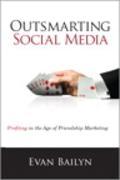
The war is on. The titanic battle between Google and Facebook has begun-and you can use it to earn more profits! In this book, Evan Bailyn reveals how to attract friendship-based recommendations that will motivate customers more than any ad or algorithm. Bailyn explains how today's Internet titans are battling to control the future of search and social media, and shows how to use their newest innovations to supercharge your marketing. Packed with case studies from Bailyn's pioneering clients, Outsmarting Social Media offers detailed predictions, careful analysis, and-above all-practical techniques. Read it, get ready for the future, and start reaping the rewards! You'll Learn How To: Discover where search and social media are headed, and what it means to you Implement strategies that work right now-and will work even better in the future Begin profiting from friendships, personal relationships, and tastemakers Start using today's new currency of trust: likes, comments, retweets, shares, and video responses Use social discovery to deliver messages with stunning personal relevance Master the "Search and Sell" method for profitingfrom real-time search Sell through personalized recommendations delivered straight to smartphones Build your business with Foursquare and Facebook Places check-ins Learn effective, low-risk ways to use Groupon-style "daily deals" Mine cash from social data in entertainment, beauty, shopping, food, travel, health, and other verticals Prepare for emerging shifts in pay-per-click, organic SEO, and web display ad markets Preview tomorrow's most exciting new social players, platforms, products, and services

Thumb

0 repins 0 comments

Revised, expanded, and updated with all-new nutrition facts and information, Eat This, Not That! Supermarket Survival Guide is the ultimate authority on packaged foods, produce, and dairy and meat products when it's time to go shopping for your family. With more than 50,000 food products in the average supermarket, it's no wonder shoppers feel confused and overwhelmed. How do they know what to buy to eat healthier and avoid packing on pounds? And as food prices skyrocket, how do consumers know they're getting the best deals? Eat This, Not That! Supermarket Survival Guide will steer buyers away from nutritional danger zones and protect them with the power of knowledge. On every page, readers will find easy-to-follow tips and nutrition facts that help them make the best choices for cutting calories, shedding pounds, and even saving money! Based on extensive research and market reporting, Eat This, Not That! Supermarket Survival Guide finally puts the shopper in control of his or her family's diet and health.

Thumb

0 repins 0 comments

It's a mad, mad world and rare is the person who gets through a single day without encountering an irritating, frustrating, or anger-producing situation. Deborah Pegues, author of the award-winning and bestselling 30 Days to Taming Your Tongue (more than 650,000 sold), is once again a voice of hope in this indispensable guide for dealing with short-term and long-term feelings of displeasure. Pegues reveals that anger is a secondary emotion. She uses biblical and modern-day stories to help you identify 18 primary emotions that may be at the root of your anger-and to choose Scripture-based responses for effectively dealing with them. You will discover anger-taming strategies such as predetermining how to respond to certain triggers; deactivating your "anger buttons"; developing a divine perspective toward frustrating people or circumstances; exercising the fruit of the Spirit to thwart impatience and irritability; and understanding how food and other factors affect mood. 30 Days to Taming Your Anger provides Scripture-based principles, heart-searching personal challenges, and powerful affirmations that point you to a new sense of freedom and improved relationships. Perfect for individual devotions, small groups, and biblical counseling.

Thumb

0 repins 0 comments

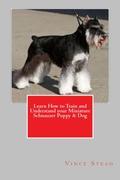
Learn how to raise and train your Miniature Schnauzer to be a really good dog! 1. The Characteristics of a Miniature Schnauzer Puppy or Dog 2. What You Should Know About Puppy Teeth 3. Some Helpful Tips for Raising Your Miniature Schnauzer Puppy 4. Are Rawhide Treats Good for Your Miniature Schnauzer? 5. How to Crate Train Your Miniature Schnauzer 6. When Your Miniature Schnauzer Makes Potty Mistakes 7. How to Teach your Miniature Schnauzer to Fetch 8. Make it Easier and Healthier for Feeding Your Miniature Schnauzer 9. When Your Miniature Schnauzer Has Separation Anxiety, and How to Deal With It 10. When Your Miniature Schnauzer Is Afraid of Loud Noises 11. How to Stop Your Miniature Schnauzer From Jumping Up On People 12. How to Build A Whelping Box for a Miniature Schnauzer or Any Other Breed of Dog 13. How to Teach Your Miniature Schnauzer to Sit 14. Why Your Miniature Schnauzer Needs a Good Soft Bed to Sleep In 15. How to Stop Your Miniature Schnauzer From Running Away or Bolting Out the Door 16. Some Helpful Tips for Raising Your Miniature Schnauzer Puppy 17. How to Socialize Your Miniature Schnauzer Puppy 18. How to Stop Your Miniature Schnauzer Dog From Excessive Barking 19. When Your Miniature Schnauzer Has Dog Food or Toy Aggression Tendencies 20. What you Should Know about Fleas and Ticks 21. How to Stop Your Miniature Schnauzer Puppy or Dog From Biting 22. What to Expect Before and During your Dog Having Puppies 23. What the Benefits of Micro chipping Your Dog Are to You 24. How to Get Something Out of a Puppy or Dog's Belly Without Surgery 25. How to Clean Your Miniature Schnauzers Ears Correctly 26. How to Stop Your Miniature Schnauzer From Eating Their Own Stools 27. How Invisible Fencing Typically Works to Train and Protect Your Dog 28. Some Items You Should Never Let Your Puppy or Dog Eat 29. How to Make Sure Your Dog is Eating A Healthy Amount of Food

Thumb

0 repins 0 comments

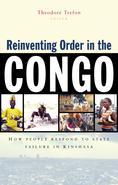
Kinshasa is sub-Saharan Africas second largest city. The seven million Congolese who live there have a rich reputation for the courageous and innovative ways in which they survive in a harsh urban environment. They have created new social institutions, practices, networks and ways of living to deal with the collapse of public provision and a malfunctioning political system. This book describes how ordinary people, in the absence of formal sector jobs, hustle for a modest living; the famous bargaining system ordinary Kinois have developed; and how they access food, water supplies, health and education. The NGO-ization of service provision is analysed, as is the quite rare incidence of urban riots. The contributors also look at popular discourses, including street rumour, witchcraft, and attitudes to big men such as musicians and preachers. This is urban sociology at its best - richly empirical, unjargonized, descriptive of the lives of ordinary people, and weaving into its analysis how they see and experience life.

Thumb

0 repins 0 comments

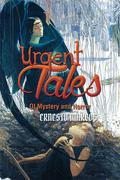
Urgent Tales-a book of surreal stories that lay bare the terrors hidden under our collective beds and confront us with our own fears. Comprised of eleven supernatural and cautionary accounts of sideshow freaks, vampires, aliens, and other mythical creatures, these tales blend horror with dread-induced humor, granting us entry into the world of the inexplicable, the irrational, and the delectably bizarre. In "Astor Roth," a young entrepreneur's inner demon emerges from her subconscious past to draw her into a monstrous and debasing reality. Set in Vienna, a successful yet vulnerable woman struggles to keep her sanity before she is consumed and possessed by her demonic lover. A serial killer watches the affairs of his next victim-her nightly ablutions, her ritual of the bath. He waits in the darkness until it is time to "transform" his prey into an objet d'art and add the woman immersed in water to his oeuvre of mutilated masterpieces. A vampire stalks the streets of Rome, Barcelona, and Miami Beach in search of sustenance, only to find he is not the one on the top of the food chain but merely a part of it. In the stories "Deal," "The Magus," and "SoBe It," the ruthless yet cerebral vampire Alejandro encounters nemeses as cold-blooded and resolute as he in their quest for power and blood. Two ex-lovers' expectations run interference for their living counterparts in the story "Reunion." Unbeknownst to their human hosts, they revisit a past filled with possibilities, consequences, and circumstances not anticipated. The dreamer dreams, or is it the dream that dreams the dreamer? In the tale "Tatiana's Dream," a brilliant antiquities professor is sought out by a fantastical vision and sent forth to discover her destiny in a multidimensional universe she not only inhabits, but must somehow control.

Thumb

0 repins 0 comments

The Constant Catastrophe: Malnutrition, Famines, and Drought deals with the 1972 drought, and emphasizes the underlying social conditions that are related to its effects. The book examines the relationship of drought as a meteorological event and the famine that results as a social event. The effects of natural catastrophes become transformed by social structures and political processes in many countries of the world, more than which can be attributable to the physical cause itself. A striking parallelism that emerges in the study is that climatological analysis implies reference to large scale space and time processes. Famine also occurs as anomalies within large-scale processes in society-famine changes nutritional levels in communities. The text proposes a theoretical framework for a methodologically-adequate diagnostic tool that can be used in studying the "factual events" in previous cases of major disasters due to climactic factors. Case studies include those that happened in the Sahel, Ethiopia, India, China, the United Kingdom, and Brazil. Among several recommendations, one which the book proposes in the management of the effects of drought, is to adopt an approach similar to that of the Red Cross. The book is suitable for economists, environmentalists, ecologists, and policy makers involved in crisis management, food production, and rural development.

Thumb

0 repins 0 comments

On a touring holiday in south-west France, a young English couple, Jennifer and Peter Robbins, quickly fall under the charms of the Lot region a land of wide meandering rivers, wooded hillsides, rugged moors and quaint stone villages bathed in warm sunshine (not to mention the more worldly pleasures of good food and curiously strong drink). Their holiday takes a step into the unknown when they decide, on impulse, to purchase a house in need of restoration in the remote and pretty village of Lecul-en-Quercy. During their frequent visits, they get to know many of the local characters, including Thomas Chêne, the wily mayor; Maisie Connell, the English estate agent who has special techniques for promoting business; Messieurs Blanc and Grospetit, the rival bakers; Marie, the Mayor's long suffering sister and reluctant spinster who daily faces the challenges of computers, community keys and the temperamental town-hall toilet. The Robbinses also have to deal with incomers like themselves William Montgomery, the retired palaeontologist with a deep secret; Gilbert and Nancy, who impress the locals with their fertility; Stéphanie de Chartres, with her out-of-place airs and graces, and even President Jacques Chirac. But it's the hilarious situations that prove the most memorable the hunter's dinner, where British honour is at stake; the annual snail race, when extreme steps are taken to ensure victory; the terrible revenge meted out to an ambitious mobile trader; the auction of the beer-drinking billy goat; the curious consequence of the incomers' visit to the cemetery that divides the community, and the pending disaster that brings them all together again. And all this in a village that, due to a cartographer's deafness and a faulty telephone, has been removed from the Michelin maps since 1939.

Thumb

0 repins 0 comments

Medical tourism is one of the fastest-growing businesses on earth. With the rising price of treatment in the UK and long waiting lists, there's never been a better time to combine a trip abroad with a treatment. Plus many other countries have not been affected by the deadly MRSA bug in the same way that the UK has - another reason why going outside the UK is an attractive option. Hospitals overseas are clean, well-staffed and the food is great. What more could you ask for? Nothing - except the guide to know where to go - and here it is. The first section of the book deals with the different types of medical procedures and at the end of each is a cross-reference to countries listed in part two. There are 24 countries you can visit which will give you the help you need at a price that can't be matched in the UK.

Thumb

0 repins 0 comments

Anthropologists training to do fieldwork in far-off, unfamiliar places prepare for significant challenges with regard to language, customs, and other cultural differences. However, like other travelers to unknown places, they are often unprepared to deal with the most basic and necessary requirement: food. Although there are many books on the anthropology of food, Adventures in Eating is the first intended to prepare students for the uncomfortable dining situations they may encounter over the course of their careers. Whether sago grubs, jungle rats, termites, or the pungent durian fruit are on the table, participating in the act of sharing food can establish relationships vital to anthropologists' research practices and knowledge of their host cultures. Using their own experiences with unfamiliar-and sometimes unappealing-food practices and customs, the contributors explore such eating moments and how these moments can produce new understandings of culture and the meaning of food beyond the immediate experience of eating it. They also address how personal eating experiences and culinary dilemmas can shape the data and methodologies of the discipline. The main readership of Adventures in Eating will be students in anthropology and other scholars, but the explosion of food media gives the book additional appeal for fans of No Reservations and Bizarre Foods on the Travel Channel.

Thumb

0 repins 0 comments

To me, growing up in South Philly was truly a wonderful and great experience. I really believe that you must have lived there yourself to really understand exactly what I am saying and why. You see, to me South Philly is unlike anywhere else, and I will try to make you understand why. South Philadelphia is a place of living life to the fullest and really appreciating it. There were wonderful foods, fast cars, beautiful girls, and really good deals for things that supposedly just happened to drop off the backs of trucks, love, caring for others and their situations, and much more.

Thumb

0 repins 0 comments

Home is where the heart bleeds. Children of the Night, Book 3Growing up, vampire-born twins Julie and Marc Fischer were taught one simple fact of life: you can choose your food, but not your family. Six months after moving to San Francisco, though, the new challenges and choices each are facing are a Gordian knot of complicated. Marc must decide whether to stay with Conrad and Damian, the only family he's ever known, or embrace his destiny and the unexpected family-the ferals-that comes along with it. Meanwhile, Julie is forced to deal with the unpleasant realization that the man she loves isn't necessarily the man who's best for her. For Conrad and Damian, the holiday season is stirring up bittersweet memories, and neither can keep from revisiting past passion and pain. Faced with new mysteries to solve, new alliances to forge, new secrets to keep, and old relationships to rebuild, it's no wonder the Fischer-Quintano vampires long for the good old days-when food was food and family was all that mattered. Warning: If you've previously suffered from Disco Fever, this book could precipitate a relapse. Extreme care is recommended for anyone with a pronounced weakness for mistletoe, fang play, pretty young men of either species or extremely dangerous alpha-male vampire single dads. May contain trace amounts of polyester.

Thumb

0 repins 0 comments

Next Page