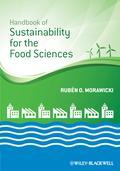
Many books on sustainability have been written in the last decade, most of them dealing with agricultural systems, communities, and general business practices. In contrast, Handbook of Sustainability for the Food Sciences presents the concept of sustainability as it applies to the food supply chain from farm to fork but with a special emphasis on processing. Structured in four sections, Handbook of Sustainability for the Food Sciences first covers the basic concepts of environmental sustainability and provides a detailed account of all the impacts of the food supply chain. Part two introduces the management principles of sustainability and the tools required to evaluate the environmental impacts of products and services as well as environmental claims and declarations. Part three looks at ways to alleviate food chain environmental impacts and includes chapters on air emissions, water and wastewater, solid waste, energy, packaging, and transportation. The final part summarizes the concepts presented in the book and looks at the measures that will be required in the near future to guarantee long term sustainability of the food supply chain. Handbook of Sustainability for the Food Sciences is aimed at food science professionals including food engineers, food scientists, product developers, managers, educators, and decision makers. It will also be of interest to students of food science.

Thumb

0 repins 0 comments

The issues related to food science and authentication are of particular importance for researchers, consumers and regulatory entities. The need to guarantee quality foodstuff - where the word "quality" encompasses many different meanings, including e.g. nutritional value, safety of use, absence of alteration and adulterations, genuineness, typicalness, etc. - has led researchers to look for increasingly effective tools to investigate and deal with food chemistry problems. As even the simplest food is a complex matrix, the way to investigate its chemistry cannot be other than multivariate. Therefore, chemometrics is a necessary and powerful tool for the field of food analysis and control. For food science in general and food analysis and control in particular, there are several problems for which chemometrics are of utmost importance. Traceability, i.e. the possibility of verifying the animal/botanical, geographical and/or productive origin of a foodstuff, is, for instance, one area where the use of chemometric techniques is not only recommended but essential: indeed, at present no specific chemical and/or physico-chemical markers have been identified that can be univocally linked to the origin of a foodstuff and the only way of obtaining reliable traceability is by means of multivariate classification applied to experimental fingerprinting results. Another area where chemometrics is of particular importance is in building the bridge between consumer preferences, sensory attributes and molecular profiling of food: by identifying latent structures among the data tables, bilinear modeling techniques (such as PCA, MCR, PLS and its various evolutions) can provide an interpretable and reliable connection among these domains. Other problems include process control and monitoring, the possibility of using RGB or hyperspectral imaging techniques to nondestructively check food quality, calibration of multidimensional or hyphenated instruments etc.

Thumb

0 repins 0 comments

Food Allergy aims to address the gap in research and literature on food allergy. Another objective of this book is to identity food allergens and provides patients with allergy a diet that is allergen-free, acceptable, and nourishing. This second edition of the book is organized into nine chapters. Several chapters from the first edition were extensive revised. These include Chapter 2 which deals with the tendency to consider all adverse reactions to foods as allergic reactions; Chapter 4 which present additions to the classification of food allergens listed in the first edition; Chapter 5 which focuses on the management of food allergy; and Chapter 9 which examines food allergy in infants. This book will be interest to medical professionals and others interested in understanding food allergy.

Thumb

0 repins 0 comments

If you're a Food Pub owner, manager, chef or entrepreneur, I don't have to tell you how challenging and competitive the business is. There's so many distractions to deal with, phone calls, emails, Ipads, podcasts and on top of all these, you have to try and really stand out from the crowd - those rivals and competitors. Your customers have the same constant interruptions and so the reasons they don't come back are many but most importantly the one we can change is that when they just forgot it's out job to remind them. Your customers have less time available and have so many options of where to go out and eat that you must have a process and system to follow-up with timely and relevant communications. These strategies are what I have studied, researched, proven and are winners and after all re there will be more competition than every before. Some of them are hard won principles, lesions that will improve your results and help you achieve what you really set out to be - a major success.

Thumb

0 repins 0 comments

This publication deals in depth with a limited number of culture media used in Food Science laboratories. It is basically divided into two main sections:1) Data on the composition, preparation, mode of use and quality control of various culture media used for the detection of food borne microbes.2) Reviews of several of these media, considering their selectivity and productivity and comparative performance of alternative media. Microbiologists specializing in food and related areas will find this book particularly useful.

Thumb

0 repins 0 comments

Methods in Food Analysis Applied to Food Products deals with the principles and the acquired tools of food analysis, emphasizing fruit and vegetable products. The book explains the suitability and limitations of the analytical procedures used for food products, from polarimetry and saccharimetry to colorimetry, spectrophotometry, viscosimetry, acidimetry, and alcoholometry. This volume is organized into 20 chapters and begins with an overview of sampling and preparation and preservation of sample. Under the physical methods, the principles of the more common procedures are discussed together with their application to the analysis of fruit and vegetable products. A brief account of the nature of the products is included. In presenting the chemical methods, the salient chemical properties of the constituent are first considered, focusing on those properties used in analysis, which is then followed by an outline of the chemistry of several of the available methods. Finally a detailed description of one of the methods, usually as applied to fruit and vegetable products, is explained. Some references to microanalytical, bioassay and bacteriological procedures are made. This book is intended for food technologists, chemists, and manufacturers; students; and researchers involved in quantitative analyses; organic and inorganic chemistry; and bacteriology.

Thumb

0 repins 0 comments

The only Australian book to address a growing phenomenon: children's food allergies and how to deal with them Food allergy occurs in around 1 in 20 children, with symptoms involving the skin, gastrointestinal tract and respiratory system. While the majority of allergic reactions are not severe, anaphylaxis - the most serious and potentially life-threatening form of allergic reaction - is no longer rare. Living with a child with food allergies can mean constant trips to doctors and specialists; painstaking preparation of foods to ensure no contamination occurs; battles with friends and family members who don't understand the potential seriousness of an allergy; confusion over food labelling; concern about how to give your child a balanced diet while excluding allergenic foods; and anxiety when leaving your child in the care of others - to name only some of the issues. As the parent of a child with multiple food allergies, Alison Orman understands the challenges. In this accessible book she explains what food allergies are, and gives sensible, practical advice on how to live with, and manage them. With the help of Dr Preeti Joshi (Paediatrician in Allergy and Immunology at the Children's Hospital at Westmead, Sydney), she helps parents navigate common problems and work out long-term solutions to keep their child happy, healthy and well-fed. An indispensable book for any Australian parent who has struggled to care for their food-allergic child.

Thumb

0 repins 0 comments

Often our lives are so busy we forget to reflect on the important issues that underpin our relationships, careers and family life. By reading a thought each day from this wise little book, we can stop for a moment and consider just where we are and how we are really doing. Do we have our lives in balance? Are we being reasonable in our dealings with other people? SOUL FOOD FOR THE HEART covers a wide range of areas, from friendship, diet and personal responsibility to tolerance, envy and injustice. Simple yet profound, these thoughts have already helped thousands of readers; they can help you too.

Thumb

0 repins 0 comments

Author Bio Ms. Spivack is well-known author and contributor to several national magazines, including Bestways, Mother Earth News, Vegetarian Times, and Whole Life Times. She is an established health advocate and lecturer, as well as the owner of Deep Roots Trading Company, a natural foods distributor in Pennsylvania. Reviews: "Put it next to Spock and Davis. The Whole Foods Experience is a good deal more than good fun. it's everything you've ever wanted to know about getting your kids to eat what's good for them. Must reading for mothers." - Francis Goulart, author of Eating To Win "Ellen tells us exactly and simply how to preserve the naturalness and flavor without making a lot of work out of it. Simple, straightforward, direct, persuasive without arm-twisting; I like that." - Dr. Lendon Smith, pediatrician/author Feed Your Kids Right About the Book: The Whole Foods Experience Everybody's Guide to Better Eating Tired of processed foods? Get back to basics with The Whole Foods Experience! The WholeFoods Experience is not just another cookbook; instead, it's a guidebook for those interested in making an inexpensive, creative transition from processed to whole foods. Processed foods permeate our mass market food stores and include a lot of preservatives and other chemicals that many people wish to do without. This book is designed for those that want to change their lifestyle to one that is filled with natural whole foods. In this one beautifully designed book you will find: A complete guide to changing your lifestyle including simple, complete suggestions for every mealtime, as well as a chapter on nutritious nibbling; Discussion on whole foods for the allergic and hyperactive; Whole foods for babies and expectant mothers; A unique and extensive section of references and referrals to organizations, publications, and other sources of information on whole foods; Delicious, healthful recipes for every occasion and palate The Whole Foods Experience was

Thumb

0 repins 0 comments

Arthritis induced Dry Eyes, Arthritis induced Dry Eye SyndromeArthritis induced Sjögren's SyndromeArthritis induced Gout -and for small measure, Arthritis induced Arthritis ~Relieved, Cured, Prevented, Here! Along with Food Intolerances, Dermatological Imbalancesand other 'AIDS-related incurable diseases'.Based on the clinical testing results of 35,000+ patients at my Softlens Practice in Soho London. No drugs -No chanting -No magic -No work with closed mind. From my 26 years of clinical and domiciliary experiences I know that Arthritis and Arthritis induced Dry Eyes, Dry Eye Syndrome and Sjögren's Syndrome are not caused by A I D S. This is no medically mystifying disease requiring billions of research dollars. In my Soho clinic during the 1980s and 1990s we prevented, relieved and cured Arthritis induced Dry Eyes daily - except Sundays and public holidays. It was no big deal like it is today. Had we realised then, that what we were dealing with was A I D S related, then we would probably have worn full rubber body suits and masks - and charged double, at least, for our services.

Thumb

0 repins 0 comments

Just to say Thank You for checking out this Book I want to give you a copy of my upcoming special report "The Prepper's Supplies Guide for When Disaster Strikes" What if your life was disrupted by a natural disaster, water or food supply contamination or any other type of emergency Do you have the essentials to provide for your family Do you have an emergency plan in place in the event that your utilities supply is cut off for an extended amount of time How prepared are you While you can't predict when a disaster will strike, the better you plan when you begin prepping, the better prepared you will be to deal with it when it does. By practicing prevention, you can mitigate the risk of a disaster. Tropical storms, blizzards, flash floods, whatever the disaster, it pays to be prepared. Disasters like these can disrupt the supply of groceries, food and other critical items. By taking some time to store emergency food supplies and water, you can provide for your entire family if the worst does happen. Survival Family Basics - The Prepper's Guide to Survival Food Storage covers the basic information that you need to know to stockpile food for emergency situations. Here's just a sampling of what you'll learn in this short concise book: How to create an emergency food storage plan that works for YOUR family How to store your food and rotate it properly so you don't waste a ton of money on spoiled The Basics of Prepping Your Own FoodHow to Sprout Beans and SeedsHow to Make Homemade YogurtHow to Dry Marinate VegetablesBasic Canning Methods with simple recipes to can tomatoes, potatoes, and chickenand much more! From building your emergency food supply to stockpiling food, the book is aimed at helping you and your family plan for a variety of emergency situations, persevere during these times and recover when it is over. Scroll up can get your copy of Survival Family Basics- The Prepper's Guide to Survival Food Storage, now before it's too late!

Thumb

0 repins 0 comments

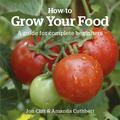
If you've never opened a seed packet before and want to grow your food but don't know where to start, this book is for you. It gives advice on everything from planting seeds to harvesting your crops and dealing with problems-and it doesn't matter whether you have a whole garden or just a patio, a balcony, or a windowsill. Home-grown food means fresh, organic, tasty meals; less money spent in the supermarket; a lower carbon footprint; and, best of all, fun. How to Grow Your Food features a range of vegetables, fruits, and herbs that are easy for the beginner to grow.

Thumb

0 repins 0 comments

Innovating Food, Innovating the Law. An interdisciplinary approach to the challenges in the agro-food sector Edited by Fernando Leonini, Mariachiara Tallacchini, Matteo Ferrari The agro-food sector represents a strategic domain for innovation both in the technoscientific and legal field. In fact, if agriculture, food production and distribution are rooted in the history of humankind, they have been radically reshaped jointly by techno-science, policy, and the law. This volume provides an overview of four major areas of interest. The first one deals with the impact of information and access to knowledge on new rights in the agro-food sector; the second focuses on the role of culture and value systems related to food and food habits; the third area concerns the legal requirements for safety in a globalized world; the fourth aims to explore new regulatory approaches to promoting and rewarding innovation in the agro-food sector. Innovating Food, Innovating the Law. An interdisciplinary approach to the challenges in the agro-food sector A cura di Fernando Leonini, Mariachiara Tallacchini, Matteo Ferrari Il settore agroalimentare rappresenta un ambito strategico per l'innovazione scientifica e giuridica. Infatti, se agricoltura, produzione e distribuzione alimentare si radicano nella storia dell'umanità, esse sono state radicalmente ridefinite dall'azione congiunta di tecnoscienza, policy e diritto. Il volume esplora quattro aree legate al cibo, all'interfaccia tra innovazione tecnoscientifica e giuridica. La prima guarda all'impatto prodotto dall'accesso all'informazione sull'emergere di nuovi diritti in campo alimentare; la seconda approfondisce le relazioni tra valori, pluralismo culturale e abitudini alimentari; la terza area considera i criteri di sicurezza alimentare in un mondo globalizzato; la quarta indaga i nuovi approcci normativi alla promozione e valorizzazione dell'innovazione agroalimentare, in particolare per quanto riguarda l'uso dei brevetti.

Thumb

0 repins 0 comments

In The Chemical Generation, Jamie Geurtjens, teacher and mother of two, not only openly shares her own families experience of dealing with an Autism Spectrum Disorder (ASD), but she also explains how she eventually realised that the hidden toxins in food were responsible for making her sons condition worse. Jamie goes on to explain how she was able to successfully "recover" her son (who had been diagnosed with Aspergers Syndrome) by removing hidden chemicals from foods, and replacing them with nourishing meals. Jamie also provides some basic nutritional advice and a two week nutritional plan, along with fast and easy recipes, to help get you started. Jamie believes that by removing toxic chemicals from our childrens lives, we will not only help an entire generation of children (and adults) with ASD, but also those suffering from other common conditions such as ADD, ADHD, Obesity, Dyslexia, Eczema, IBS, Anxiety, and depression.

Thumb

0 repins 0 comments

These are short, easy to read, Christian concepts designed to encourage your daily walk with The Lord. It provides scriptures to reference and read, along with a small encouraging snippet of a relevant topic. It is great for daily bible study and touches a variety of issues you deal with on a daily basis.

Thumb

0 repins 0 comments

This bestselling reference bridges the gap between the introductory and highly specialized books dealing with aspects of food biochemistry for undergraduate and graduate students, researchers, and professionals in the fi elds of food science, horticulture, animal science, dairy science and cereal chemistry. Now fully revised and updated, with contributing authors from around the world, the third edition of Biochemistry of Foods once again presents the most current science available. The first section addresses the biochemical changes involved in the development of raw foods such as cereals, legumes, fruits and vegetables, milk, and eggs. Section II reviews the processing of foods such as brewing, cheese and yogurt, oilseed processing as well as the role of non-enzymatic browning. Section III on spoilage includes a comprehensive review of enzymatic browning, lipid oxidation and milk off-flavors. The final section covers the new and rapidly expanding area of rDNA technologies. This book provides transitional coverage that moves the reader from concept to application. Features new chapters on rDNA technologies, legumes, eggs, oilseed processing and fat modifi cation, and lipid oxidation Offers expanded and updated material throughout, including valuable illustrations Edited and authored by award-winning scientists

Thumb

0 repins 0 comments

This book provides a comprehensive and accessible source of information on all types of sweeteners and functional ingredients, enabling manufacturers to produce low sugar versions of all types of foods that not only taste and perform as well as sugar-based products, but also offer consumer benefits such as calorie reduction, dental health benefits, digestive health benefits and improvements in long term disease risk through strategies such as dietary glycaemic control. Now in a revised and updated new edition which contains seven new chapters, part I of this volume addresses relevant digestive and dental health issues as well as nutritional considerations. Part II covers non-nutritive, high-potency sweeteners and, in addition to established sweeteners, includes information to meet the growing interest in naturally occurring sweeteners. Part III deals with the bulk sweeteners which have now been used in foods for over 20 years and are well established both in food products and in the minds of consumers. In addition to the "traditional" polyol bulk sweeteners, newer products such as isomaltulose are discussed. These are seen to offer many of the advantages of polyols (for example regarding dental heath and low glycaemic response) without the laxative side effects if consumed in large quantity. Part IV provides information on the sweeteners which do not fit into the above groups but which nevertheless may offer interesting sweetening opportunities to the product developer. Finally, Part V examines bulking agents and multifunctional ingredients which can be beneficially used in combination with all types of sweeteners and sugars.

Thumb

0 repins 0 comments

Advances in instrumentation and applied instrumental analysis methods have allowed scientists concerned with food and beverage quality, labeling, compliance, and safety to meet ever increasing analytical demands. Texts dealing with instrumental analysis alone are usually organized by the techniques without regard to applications. The biannual review issue of Analytical Chemistry under the topic of Food Analysis is organized by the analyte such as N and protein, carbohydrate, inorganics, enzymes, flavor and odor, color, lipids, and vitamins. Under 'flavor and odor' the subdivisions are not along the lines of the analyte but the matrix (e.g. wine, meat, dairy, fruit) in which the analyte is being determined. In "Instrumentation in Food and Beverage Analysis" the reader is referred to a list of 72 entries entitled "Instrumentation and Instrumental Techniques" among which molecular spectroscopy, chromatographic and other sophisticated separations in addition to hyphenated techniques such as GS-Mass spectrometry. A few of the entries appear under a chapter named for the technique. Most of the analytical techniques used for determination, separations and sample work prior to determination are treated in the context of an analytical method for a specific analyte in a particular food or beverage matrix with which the author has a professional familiarity, dedication, and authority. Since, in food analysis in particular, it is usually the food matrix that presents the research analytical chemist involved with method development the greatest challenge.

Thumb

0 repins 0 comments

Food Jockey is more or less an account of Spencer Palmer's year in the business of fast food. In telling his experience Palmer holds nothing back, he tells you what goes on when a fast food worker dons the uniform and tells you what the job is like and lets you in on the everyday goings of the restaurant business. Palmer reveals stories of working alongside fellow employees, dealings with the public, restaurant procedures, and everything else that goes on within the walls of Fuddruckers. Spencer Palmer began the job one-day and found himself leaving a year later realizing it was rare for a single person to last a whole year in the fast food business. He reveals what drove him to take his job and he tells what drove him to leave his job after a year. At times this tale is not pleasant as it reveals the dark side to Palmer's thoughts and the actions of numerous people. A revealing tale, Palmer tells everything what a person encounters while he is on the job in the restaurant business. What is it like to work in a fast food restaurant? Just ask Spencer Palmer.

Thumb

0 repins 0 comments

Breastfeeding and Food Policy in a Hungry World documents the proceedings of the International Conference on Human Lactation held by the New York Academy of Sciences in March 1977. The contributions made by researchers at the conference are organized into five sections. Section One presents studies on the family contexts of breastfeeding and social myths and economic realities of breastfeeding. Section Two examines cultural factors in infant feeding practices, including breastfeeding practices of women in India, Nigeria, and China. Section Three deals with the economic and commercial aspects of infant weaning foods. It includes studies on economics of food aid programs; the difficult problems involved in developing a dairy industry in warm climates; and the effects on breastfeeding of the present political climate. Section Four presents studies on physiological, psychological, public health, and political considerations in human lactation. Section Five describes several programs designed to improve the health of children. These include nonformal education to help women help themselves and their families, and food subsidies and decentralization of service to improve the health of poor people.

Thumb

0 repins 0 comments

Next Page